Showing posts with label Domestic Violence Programs. Show all posts

July 17, 2012

An Abuse Survivor's Search for Support

By: Marci Manley, KARK 4 News

Updated: July 16, 2012

Video Available on original article

"Since I left a domestic violence relationship in March, it's been really hard," she said, reading from the screen.


Dana has been searching for support in Little Rock after leaving an abusive relationship that lasted two and a half years.


"I still have nightmares every night, and I'm scared, she said. "I'm always looking around. If my children run up on me, wanting to play, I jump."


Finding a support group of women, outside of a shelter living situation, has been tough. Dana believed deciding to leave the abuse behind would have been the hardest part.


"Once you've made that decision, it's not over. It's important to leave, but it's also important to have support once you've left, instead of people saying here's a phone number and you falling through the cracks. That's what I felt like happened to me," she said. "Every time I would call the numbers, it was the same thing that support groups were only available to those residing in the shelter facilities."
Instead of giving up, Dana checked out. A book that is, written by another survivor. Mildred Muhammad is the ex-wife of the man known as the D.C. Sniper. Before his 10-person killing spree, his violence began in their home.


"I checked out the book and there were a lot of things in there I could identify with," Dana said. "Ms. Muhammad's email was in the book, and I decided to write her."


That memoir marked a turning point. Dana never expected a response, from Mildred Muhammad. But she got one.


"She sent my email to someone else, and my phone started ringing almost instantly last week.," Dana said.


"It's been difficult to get victims in touch with resources, and here recently it seems to have gotten more difficult," said Community Outreach Coordinator Meredith Looney of Women and Children First. "There are so many shelters that offer so many services, sometimes there's confusion."


Domestic violence organizations like hers know getting the right information to survivors can be a challenge, especially with staff turnovers.
"We do have staff turnover and we train the best we can, but if someone forgets that we have outreach programs for people who don't stay at our shelter, they might tell someone that. Then, that creates confusion," Looney said. "But we do have those resources and we do want survivors to be able to use them."


Women and Children First offers an whole host of support groups held throughout the week.


"They can be really comforting," Looney said. "Getting into these groups allows you to plug yourself into the reality that you're not the only one, you're not stuck."


"You still feel embarrassed, ashamed, and lonely," Dana said. "And I think being with a group of survivors who have been there would be good for me. Understanding how they're coping, and what they are going through. I don't want to feel alone."


After four months, Dana is plugged into the Women and Children First's program, and she's hoping other women find the help to heal as well.
"I needed help, and I'm sure there are other women in that situation who called," Dana said. "Hopefully they'll know the support is there."


To see the complete list of support groups offered by Women and Children First, click here.

March 27, 2012

Maryland passes bill providing unemployment benefits to domestic abuse victims

I’m so glad to see this!  I pray that other states start implementing this as well to help Victims not have to choose between safety and their income.  Too many victims have no choice but to stay in their current job because they can’t go without the income, and too many abusers use this to their advantage…

March 27, 2012

Lt. Governor Anthony Brown and Maryland Labor Secretary Alexander M. Sanchez announced that legislation to provide victims of domestic abuse with unemployment benefits has passed through the Maryland General Assembly.  The law would help people who must leave a job because continuing to work poses a threat to the safety of the victim, his or her spouse, children or parents.

The Maryland Department of Labor, Licensing and Regulation sponsored the legislation.  The Lt. Governor testified before the Senate Finance Committee and the House Economic Matters Committee in February.  On March 23, 2012, the House voted 108-28 to pass the law which made it easily through the Senate 46-0.

Lt. Governor Brown takes this issue very seriously.  Unfortunately he has personal experience as his cousin Cathy was senselessly murdered by her estranged boyfriend in 2008. (See video, left)

He used his experience as a legislator and that of a family member affected by the tragedy of domestic violence to move this bill through quickly so that victims can heal and get back on their feet financially as soon as possible.  In a formal press release, the Lt. Governor said that no one should have to "choose between personal safety and financial security."

He has worked with Governor Martin O'Malley to pass other laws supporting domestic violence victims.  His work includes restricting guns from getting into the hands of convicted abusers and upholding protective orders initiated by the abused.    

According to governor.maryland.gov , domestic violence deaths in Maryland have dropped by 41% since O'Malley and Brown took office.  For more information on unemployment benefits, financial assistance and the laws and services available to the citizens of Maryland, visit md.gov.

Original Article

March 21, 2012

Volunteers for DV Hotline Needed in Washington County, ME

By Tom Walsh, BDN Staff

Posted March 11, 2012, at 11:09 a.m.
Last modified March 11, 2012, at 5:36 p.m.

MACHIAS, Maine — Stepping into a domestic violence altercation can be among the riskiest situations that those on the front lines of law enforcement ever face.

“What an officer is walking into is the most lethal point of a relationship,” said Travis Willey, a patrol lieutenant with the Washington County Sheriff’s Department. “Each situation is different and is very dynamic, and these are some of the most dangerous calls to which police respond.”

How police respond can keep a victim safer or put that person in more jeopardy, he said. “You’re dealing with a very intimate situation between two people at one of the most stressful times of their lives. And when substance abuse is involved, it makes it more unpredictable.”

Willey is the liaison between the Sheriff’s Department and Next Step, the domestic violence project that for 20 years has served domestic abuse victims in Washington and Hancock counties. The agency provides shelter to those dealing with spousal abuse, offering counseling and providing alternative living arrangements in safe houses for battered spouses and their children. Next Step maintains a 15-bed shelter at an undisclosed location in Washington County, with stays ranging from a few days to a few months.

“Domestic violence is about power and control,” said Rebecca Hobbs, the executive director of Next Step. “It’s a lethal relationship, and it’s a very difficult childhood to live in an abusive home. Leaving can be very traumatic, and it’s difficult as a victim of abuse to know what’s best for the kids. We talk with victims about safety and whether there are other safe home living options. We also need to assess whether they are able to live in a communal setting.”

Willey said Next Step caseworkers are essential to the process of victims preparing statements that can be used in prosecuting abusers on charges ranging from assault to criminal threatening, criminal mischief and harassment.

“Next Step’s involvement keeps victims on board,” Willey said. “It improves the quality of the case for the District Attorney’s Office, which increases the chances of conviction.”

Such statements are also crucial, he said, to obtaining court-issued protection orders.

“Protection orders can sometimes provide the break that allows Mom and Dad to regroup and to get the help they need,” Willey said. “There are some success stories out there.”

On a per-capita basis, domestic violence is less of a problem in Hancock County than in Washington County, Hobbs said. That, she says, may be related to higher unemployment, poverty and substance abuse in Washington County.

“Last year we served 900 people, and 400 of those were in Washington County, which has a population that is much smaller than the population of Hancock County,” she said. “It’s more of an issue here.”

Hobbs said her agency is in the process of recruiting and training volunteers who staff a telephone hotline that fields calls from victims of domestic violence. The next training session is on April 7, she said. For more information, call 667-0176.

Original Article

March 11, 2012

New center helps families of domestic violence with supervised visits, child exchanges

Huge Kudos for this center!!!  Mary and I were just discussing the other day how so many women are at risk when dealing with exchanges with their past abusers, and how many are in fear when their children are made to go to a visitation with their past abuser.  One of the mothers we know who had just started having to let her daughter go to exchanges was in a full panic much prior to having let her daughter spend the weekend with her past abuser, not wanting to give her daughter over because she was in total fear of what may happen, yet having to do so anyway because she was court ordered to.  Throughout the weekend she was a mess, and it was very heartbreaking to see a mother in such fear but having no other alternative because it was court ordered.  Thankfully things went well and her daughter came home safe from the visitation, but no parent should have to be made to live through that fear! 

We also talked about how exchanges can be used as a means to further manipulate and abuse the victim, and how the children are caught in the middle.  How many mothers go to these exchanges in total fear of their abuser, but having to do so because of a court order.  How it would be wonderful to get Advocates together who would go to these exchanges with the mothers, but I’m glad that centers like this are available to some victims at least.

February 28, 2012, 2:53 pm

By Nadia Crow/SourceMedia Group News

CEDAR RAPIDS-

“We help unite the families without them having to communicate with one another,” said Family Visitation Center of Linn County Program Director Elizabeth Riechers.

It’s a difficult task for parents who have a no-contact-order after a domestic violence incident.  Now families in Linn County can find a Safe Haven at the county’s Family Visitation Center.  The first-of-its-kind center in the state allows for supervised visits and child exchanges under supervision. The center opened in December, but staff hopes Tuesday’s open house gives them more attention.

It’s a relatively new resource for victims of domestic violence. Through federal dollars, this center allows kids to have both parents in their lives regardless of the serious problems their parents might have.

“Exchanging the children in front of the police station, McDonald’s, someplace in the open,” said Riechers.

But now families affected by domestic violence can come to the Linn County Family Visitation Center.

“Alot of times the batterer uses the time with the kids as another way to hurt the other parent.  Whereas here that won’t happen. We would stop the visit or do an intervention and ask the parent to change the subject,” said Family Visitation Center of Linn County Program Coordinator Cassandra Gibson.

Each visitation room also has a double-sided mirror so staff can monitor appointments.

“A lot of times, children feel in the middle or it’s their fault.  Where here the focus is on their relationship with the other parent,” said Gibson.

Safety and security top priorities here at Safe Haven. That’s why anytime someone comes to the building they have to be buzzed in to get inside the facility.  All clients and visitors are watched on multiple security cameras throughout their stay at the Family Visitation Center.

“It could be as risky as death, violence, shooting,” said Riechers.

Staff say the center is most crucial during the first few months of separation when lives are most at risk.  A family may only use the Family Visitation Center if they’re involved in a domestic violence situation.  The center ultimately hopes to help about 100 families a year.  They’re also working to serve a six-county radius and not just Linn County.

Original Article

March 10, 2012

Calgary police buoyed by drop in domestic violence charges

I’m glad to hear that the complaints are rising slightly, may mean more victims are getting reached and reaching out for help!  I like that they have gotten social workers involved with the team, and think it would be great to add in Domestic Violence Advocates to that team to make it more rounded.  Other areas have been seeing good outcomes when building such teams, and I pray that it’s the same for Calgary.

Complaints rise slightly, according to new data

By Jason van Rassel, Calgary Herald March 5, 2012

CALGARY — Domestic violence continues to exact a high toll on society, but in Calgary there are signs more people are seeking help before it’s too late.

In 2011, the number of domestic complaints received by Calgary police climbed to approximately 16,500 — an increase of more than 4.5 per cent over the 15,789 recorded the previous year.

While that statistic points to a high number of families in conflict, police and agencies that work in the domestic violence field say there’s reason for optimism because the number of criminal charges arising from those incidents is going down.

“After a dozen years of working on this thing, maybe we’re finally making a difference,” said Kevin McNichol of HomeFront Calgary, the coalition of police, prosecutors and local agencies behind a specialized court that hears domestic violence cases.

Calgary police laid 3,772 criminal charges while responding to domestic calls in 2011, down from 4,044 charges the year before.

Authorities in Calgary have worked for years to bring police, prosecutors and local agencies together in a coordinated effort to reduce domestic violence.

Established in 2000, the domestic violence court works to break the cycle of abuse by offering treatment to perpetrators who are willing to change and jailing the ones who aren’t, while at the same time ensuring shelter, protection and support for victims and children.

When it first began hearing cases, between 30 and 35 per cent of defendants would go on to face a new accusation of domestic violence. The recidivism rate among domestic abusers eligible for the specialized court now sits at about 12 per cent, McNichol said.

Despite some encouraging signs, domestic violence continues to kill people — most recently 33-year-old Andrea Conroy, who was stabbed to death in her Airdrie home by ex-boyfriend Richard Doucette.

Doucette later killed himself in a Nanton hotel room.

The RCMP had no reports of trouble between the couple, but Doucette had a long history of violence.

Doucette, 41, spent time in prison for the attempted murder of a girlfriend in the 1990s and had two more recent convictions in Calgary for assaults on another woman.

Historically, domestic homicides have accounted for just over 25 per cent of killings in Calgary.

Of 364 reported homicides in Calgary since 1992, 97 involved a spouse, intimate partner or family member who either committed the crime or stands accused of it.

As is the case generally with domestic violence, perpetrators and suspected killers in those family homicides are mostly male: 74 men, compared to 23 women.

Although only one of Calgary’s 11 homicides in 2011 involved domestic violence, police are still dealing with thousands of cases and local women’s shelters are often running at capacity.

“We’re super busy,” said Staff Sgt. John Guigon of the domestic conflict unit, which reviews all domestic calls handled by police and becomes involved in cases deemed to be a higher risk.

Guigon credits a pilot project that employs police and social workers to steer families toward community resources before their domestic crises become more serious with cutting the caseload (see sidebar above), but it’s still a significant one.

“How do we fix that? I really wish I had a really good answer,” he said.

Like McNichol, Guigon said the lower number of criminal charges resulting from those police visits may be a sign families are seeking help sooner.

“I think it’s getting easier for people to talk about it,” he said.

While Calgary may be finally seeing results from its collaborative efforts, smaller communities often can’t offer the same.

Some municipalities have their own specialized courts and the RCMP has teams of domestic violence investigators at some larger detachments, but those resources don’t exist in many communities.

“In some ways it’s a postal-code lottery, depending on where you live,” said Jan Reimer, provincial co-ordinator for the Alberta Council of Women’s Shelters.

Many communities don’t have the population to support the same resources as cities like Calgary, Reimer acknowledged — but she added they are still lagging behind in more basic areas, such as shelter spaces.

Reimer’s organization is one of many in the domestic violence field pushing for the Alberta government to establish a body that would examine each domestic homicide and make recommendations.

“There could be a great deal to learn,” she said.

jvanrassel@calgaryherald.com Twitter:@JasonvanRassel

March 1, 2012

Pottstown police aim to curb domestic violence

“It doesn’t matter how good of a police agency you have when it comes to domestic violence ... those are crimes that happen in the privacy of people’s own homes. Good police work isn’t going to prevent domestics from happening,” he said. However, he emphasized, educating people about domestic violence and providing resources to victims, “those are things that can be done to reduce incidents of domestic violence.”

By Brandie Kessler
bkessler@pottsmerc.com

Posted: 02/26/12

Mercury file photo Pottstown police chief Mark Flanders.

POTTSTOWN — The Mercury had no sooner confirmed a murder in the borough Feb. 2, than rumors began to fly about the motive of that killing.

Comments on PottsMerc.com, The Mercury’s website, and its Facebook page immediately began referencing “PottsVegas,” and the misguided belief, summed up in one comment that the killing was “prolly over a measly 20 dollar drug exchange.”

Although some people made comments defending Pottstown, stating that crime can happen anywhere, the overwhelming majority of comments painted a picture of a community littered with crime, drugs and murder.

But just as police confirmed the Feb. 2 murder — the first murder in the borough in more than four years — stemmed from an alleged domestic incident in which a 31-year-old mother of two was allegedly strangled by her boyfriend, police also say Pottstown’s reputation and the statistics regarding crime within the borough’s borders don’t jibe.

Police Chief Mark Flanders recently spoke out about the reality of crime in Pottstown, and the necessity to stop giving credence to the misinformation when real issues, like domestic violence, deserve the attention.

“Crime is proportionate to population across America,” Flanders said. “We’re no different. (But) our crime rate is perceived to be high with no consideration to our population.”

With more than 22,000 residents in the 5.1-square-mile borough, Flanders said there’s bound to be crime, much as there is crime every place that people live.

“Crime is unacceptable, but it’s a reality,” he said.

Another thing that is unacceptable, he said, is the perpetuation of misinformation regarding crime in Pottstown.

“When I hear people say ... ‘there’s a murder that happens every weekend (in Pottstown),’ it’s totally not true. We haven’t had a murder since 2008,” Flanders said. “When I hear comments that drug dealers are killing each other left and right, no, that’s not accurate.”

Flanders said that through his career in the borough, “most of the homicide investigations have involved individuals who had a relationship with one another,” meaning they were married, dating, friends or acquaintances, and the murder was not a random act of violence.

That is once again the case with the Feb. 2 murder of Alicia Schmidt, allegedly at the hands of her boyfriend, Edwin Carrero II. Police found Schmidt’s body in the basement of her residence after they responded there to follow-up on a report. According to court records, Carrero made an early morning phone call to his ex-wife and told her he may have killed Schmidt. He stated he choked Schmidt and pushed her down the stairs. He then asked his ex-wife to give him “a half hour to an hour” before she called police.

Carrero was captured by authorities on Feb. 7. He allegedly fled from Pennsylvania in Schmidt’s vehicle, and he was arrested at a Florida resort casino after he was observed in Schmidt’s vehicle. He is awaiting extradition back to Montgomery County where he will face murder and related charges.

Although Flanders would not speak about the Carrero case, as it is his department’s policy to not comment on ongoing investigations, Mercury archives indicate the relationship between Carrero and Schmidt is typical of relationships where domestic violence is present.

Court records and Mercury archives indicate Carrero was arrested in December 2010 for a prior incident at Schmidt’s residence on Cherry Street. During that incident, Carrero allegedly stole Schmidt’s vehicle after an altercation in which he told her if she called the police and he got arrested, he would “do my time and then get out and come after you.”

Speaking in general about incidents of domestic violence, Flanders said it’s not uncommon for domestic violence incidents to evolve and escalate.

“Generally speaking,” he said, “when we investigate serious crimes of domestic violence,” meaning those that fall into the Part I category of crimes, such as homicides and aggravated assaults as opposed to harassment or stalking, “typically there is a history.”

And that previous murder in 2008? Also domestic violence.

One challenge of policing domestic violence, Flanders said, is that it’s not something that responds to policing.

“It doesn’t matter how good of a police agency you have when it comes to domestic violence ... those are crimes that happen in the privacy of people’s own homes. Good police work isn’t going to prevent domestics from happening,” he said. However, he emphasized, educating people about domestic violence and providing resources to victims, “those are things that can be done to reduce incidents of domestic violence.”

Flanders said he considers all incidents of domestic violence serious “because, if left unchecked, it’s going to escalate.”

Flanders said that although it’s a mistake to say there are a lot of murders in the borough, he would agree with someone who says domestic violence is a problem in the borough.

“In Pottstown, we have traditionally handled what I think is a lot of domestic calls,” he said.

The peak of such calls came in 2005, when the Pottstown Police Department handled nearly 2,000 calls for domestic violence. Since then, Flanders has addressed the issue of domestic violence differently.

“From 2005 to 2008, we started training our officers better,” he said.

There was new information regarding the psychology of domestic violence incidents, and there was also a push from advocates and agencies helping victims for law enforcement to do more.

Flanders recalled the days when very little was done to address domestic violence.

“When I started in police work (33 years ago), ... typically we split the parties up. We’d tell one party, typically the man, to go somewhere for the night to go cool off.

“Police didn’t get involved in family business,” he said. “That was the wrong approach.”

Flanders said the approach was not only ineffective, because the abuser knew there would be little consequences to their actions, but it often exacerbated the problem.

“Why would you report something if you know you’re not going to be taken seriously,” Flanders said, referencing victims of domestic violence. Furthermore, why would you report an incident to police if you knew the consequences could result in more abuse?

Pressure from organizations that advocated for victims of domestic violence affected change, going to legislators and law enforcement officials, Flanders said. “It forced us to get involved in family business.”

Thanks to those who pushed for change, there are now more programs that help victims, Flanders said. Among those programs in Montgomery County are Laurel House, the Women’s Center of Montgomery County and the Domestic Abuse Response Team (or DART) program. There are also programs that address batterers, like The S.A.F.E. Project, which stands for Stop Abuse Foster Empowerment, run by social worker Chuck Gallun.

Flanders said these programs also enable police to do a more effective job. For example, the DART program sends a volunteer to provide support to a victim of domestic violence as soon as they’re notified there is an issue. That support, Flanders said, is invaluable It “provides us with the ability to have a responder come out immediately to be with a victim. It’s given law enforcement to provide services we couldn’t before.”

Flanders recalled the frustration that he and many of his colleagues felt years ago.

“When I started in law enforcement in the late 1970s, the generation I was hired with, many were frustrated,” he said. “There were no consequences (for perpetrators of domestic violence.) There was a lot of work (done by police,) but no consequences.”

Today, “I think we’re in a much better place in that regard. But I think we have a long way to go,” Flanders said. He said he feels the “number one tool” to continue making strides against domestic violence is education. Addressing youth, in particular, is of extreme importance, he said.

It’s also important, Flanders said, that people speak up when they see, hear or suspect something is happening, even if it’s happening behind closed doors.

“If somebody observes domestic violence occurring, I hope they would give us a call and get us involved,” Flanders said. He noted that a neighbor who reports hearing abuse next door need not worry that they will be found out as the person who called police. “We don’t make it a habit of telling the names of people who call us,” he said.

Acknowledging that some people don’t want to involve the police, Flanders said there are resources victims can use that don’t mean going to the police. “There are a lot of places you can go without anybody knowing,” he said.

If you know someone who is dealing with domestic violence, help is available. Montgomery County Women’s Center can be reached at 610-970-7363; the Domestic Violence Center of Chester County can be reached at 610-431-1430; Berks County Women in Crisis can be reached at 610-372-9540; and Laurel House can be reached at 610-277-1860. The SAFE Project can help abusers stop being abusive. The Children’s SAFE Project can help kids who witness or are affected by violence in the family. For information on these programs call 610-326-9250 ext. 1197.

Follow reporter Brandie Kessler on Twitter @I_M_BrandieK

Original Article

Officials hope stronger laws help curb domestic violence Read more:The Daily Home - Officials hope stronger laws help curb domestic violence

by David Atchison

Feb 26, 2012

Carrie Leland, the YWCA Central Alabama Rural Domestic Violence Services coordinator, talks with St. Clair County District Court Judge Alan Furr. Misdemeanor domestic violence cases are tried in district court. Photo by David Atchison/The Daily Home<br />

St. Clair County has seen an increase in domestic violence murders committed by men against women.

“I find it disturbing we saw an increase last year,” said Carrie Leland, the YWCA Central Alabama Rural Domestic Violence Services coordinator.

She said St. Clair County logged one homicide each year resulting from domestic violence in 2009 and 2010, but that number jumped to two last year.

Leland said there have been two domestic violence murders committed against women already this year, and it is only February.

“I’m alarmed we had two in the first month of 2012,” she said.

Leland said she hopes the recent strengthening of new domestic violence laws will help curb domestic violence and hold perpetrators accountable for their actions.

“In September 2011, some changes were made to Alabama’s domestic violence laws, which added new felony and misdemeanor crimes and mandatory jail sentences for multiple convictions,” Leland said. “There are now mandatory jail sentences for people convicted for their second and third domestic violence offenses.”

She said domestic violence is the leading cause of injury to women in the United States, and in 2010 Alabama was ranked second in the nation for women killed by men in domestic violence incidents.

Leland said since 2009, 97 women and 78 children have stayed in the YWCA confidential domestic violence shelter in St. Clair County.

“Unfortunately, we are a very busy operation, but we also know that every victim does not reach out to us for help,” she said. “Some suffer in silence and some do not know help is available.”

In 2011 alone, the YWCA St. Clair County office served 1,904 victims in courts and through crisis calls.

Court systems across the state are filled with domestic violence cases, with most cases involving the abuse of women committed by a boyfriend or husband.

“I think one of our biggest problems is that the victim refuses to cooperate,” St. Clair County Assistant District Attorney Gwendolyn Connelly said. “We try to make them understand that we are trying to get their partner help. The violence is going to increase over time unless they get help.”

She said St. Clair County contracts with outside services to help break the cycle of domestic violence against women.

Domestic violence offenders sometimes volunteer and others are ordered to the six-month domestic violence intervention program.
Connelly said the program can work.

“It seems to be really effective for first-time offenders,” she said. “It certainly gets their attention.”

She said some offenders return to court and face prosecution.

Connelly said offenders could face up to 12 months in jail for domestic violence misdemeanor convictions.

Felony convictions could mean stiffer penalties and possible prison time.

If convicted, she said, an offender could lose their right to carry a gun.

Connelly said it is not uncommon for domestic violence offenders to use alcohol or drugs.

“I have seen alcohol and drug abuse as one of the factors in the majority of domestic violence cases,” she said. “It can be a challenge to get the defender clean before you can address the domestic violence issues.”

Connelly said it’s important that women cooperate with law enforcement so their partner can get help before the violence escalates.

“They could end up being a homicide victim,” she said.

Talladega County District Attorney Steve Giddens said his office has and will prosecute domestic violence offenders with or without a victim’s cooperation, but he said it is a challenge for law enforcement if the victim does not cooperate.

“We tried a case three years ago where the wife refused to testify,” Giddens said. “He (her husband) hit her in the head with a hammer.”

He said the children testified in the case. Prosecutors used 911 tapes and the victim’s statements made to officers who arrived on the scene.

“She refused to testify, but we tried the case, and the guy was found guilty by a jury,” Giddens said.

He said one of the biggest changes in recent domestic violence laws that has helped law enforcement prosecute domestic violence offenders is the “probable cause law.” The law enables police to arrest a suspect of domestic violence if there is probable cause that a domestic violence crime occurred.

Giddens said the Talladega County District Attorney’s Office also employs a victim’s advocate who assists and aids victims. He said the victim advocate can assist in filing restraining orders and help the victims through the court process.

Giddens said the Domestic Violence Victim’s Advocate position is funded through a federal grant the District Attorney’s Office applied for several years ago.

He said domestic violence cases are sometimes difficult to prosecute when the witnesses refuse to testify in court or refuse to go forward with charges against the offender.

Giddens said there are many reasons a witness may refuse to testify against their husband or boyfriend, including fear.

“Sometimes they move back in with them and, of course, they (the offender) are absolutely on their best behavior,” he said.

He said the District Attorney’s Office had one case where the offender pointed a gun and attempted to shoot his wife. The gun malfunctioned.

“Instead he beat her with the gun, breaking the butt of the rifle,” Giddens said. “If that gun had operated like it should have, we would have been trying a murder case.”

The woman did not want her husband prosecuted.

He said it is important that people report domestic violence incidents.

“People need to be held accountable for what they have done,” Giddens said.

Leland agreed, saying domestic violence is not a momentary loss of temper and is inexcusable.

“It is a behavioral choice that only the batterer is responsible for and is not caused by job stress, economic stress, family stress or substance abuse,” she said. “Domestic violence is a deliberate pattern of abusive tactics by one partner in an intimate relationship to obtain and maintain power and control over the other partner.”

Leland said everyone should feel safe in their own home, which is where most domestic violence incidents occur.

“Victims of domestic violence my be isolated from friends, family and neighbors and lose their network of social support,” Leland said. “With time, the abusive partner may use increasingly severe methods to maintain control. Eventually, the violence may lead to serious injury and can result in hospitalization or death.”

Leland said the YWCA offers confidential shelter, legal services, assistance in filling out protection from abuse petitions, support groups and relocation assistance to victims of domestic violence.

“There is no excuse for domestic violence, and its costs are just too high,” Leland said.

Contact David Atchison at datchison@dailyhome.com.

Original Content

Externships link Arkansas law students, women

What a wonderful program!  Kudos for those doing this, it is very much needed!

They’re right, women are many times more then overwhelmed when attempting to navigate the court system.  So often they are not mentally capable of doing so, their mind being in such fragments from the abuse, the change, it’s as if their system goes into shock.  So often this stops women from going to court against their abuser, not to mention the fear factor involved and at times the financial issues.  Women really need someone to fully guide them through, to support them through the process.  People that understand that it isn’t going to be easy on them, and that more time may be involved to help a victim through the process then it would someone whose world hasn’t been torn apart.  Include self esteem issues, many women come out of abusive situations with the mind set that they can’t do anything correct and couldn’t possibly go against their abuser in court.

I’ve heard other programs such as this, and it’s great to see yet another program starting up to help women through the court process.  I hope to see more of them in the future!

Externships link Arkansas law students, women

Feb 26, 2012 3:00am

LITTLE ROCK, Ark. (AP) — Victims of domestic violence are often overwhelmed navigating the court system while tending to all the details as they try to rebuild their lives, say those working on their behalf.

Hiring an attorney is also a financial hurdle for a woman escaping abuse, so a new program between the University of Arkansas and the Donald W. Reynolds Peace at Home Family Shelter provides legal assistance to domestic violence victims.

Samantha Leflar, a licensed attorney overseeing the program, hopes it will allow her to assist more victims from Peace at Home, which serves only women.

Leflar also hopes UA law students, known as fellows under the program, will find solutions that will help her clients and all victims of domestic violence, she said.

"They're really motivated and excited," Leflar said of the students. "Putting that human face on it gives you a reason to get up in the morning. You're actually providing a tangible benefit to somebody's life who needs your help."

Leflar, a 2010 UA law graduate, said the program is the brainchild of Susan Schell, director of career services at the law school.

Schell volunteers at Peace at Home, and she saw the "externship" program as a way to connect to law school students interested in public service and providing free legal services for women at the shelter.

The pieces for the externship program came together after Leflar secured a two-year Skadden Fellowship that focused on domestic violence.

That means Leflar could be the licensed attorney needed to supervise the students, Schell said. Then the UA Women's Giving Circle awarded the program a $10,000 grant that allows law students to earn $1,000 to $3,000 while assisting Peace at Home clients.

One law student is selected as a fellow each semester.

"Everything came together at the right time," Schell said.

Domestic violence victims can represent themselves in pursuing an order of protection, but they are at a disadvantage if the abuser has an attorney, said Jayne Ann Kita, executive director of the Arkansas Coalition Against Domestic Violence.

Hiring an attorney is a financial burden for a woman in that situation, she said. Women receive assistance from attorneys who sometimes offer free services, she said.

There are also free legal aid organizations, such as Legal Aid of Arkansas, but those firms often struggle with funding, Kita said.

"The shelters are struggling with basic needs," Kita said. "They would love to be able to pay for attorneys."

Leflar's fellowship allows her to provide direct legal representation to victims of domestic violence. Also a staff attorney for Legal Aid of Arkansas, she said she is interested in helping victims combat financial dependence that can lead them back to living with their abusers.

Common legal issues for domestic violence victims involve orders of protection, child custody and divorce, Leflar said. She's also given legal advice on their rights and protections in the law and counseled clients on credit and housing issues.

"There's a lot of room for helping with interviewing victims and seeing what they need and backing that up with legal research," Leflar said.

Legal concerns go beyond what the law provides, Leflar said.

Victims weigh whether protection orders will make their situation more volatile, or the legal impact on their children and whether they need to hide to prevent further harm, she said.

The externship program has given her the ability to take on a few more individual cases, Leflar said. With the assistance of the fellows, Leflar can consider how laws could be changed to improve the protection of domestic violence victims, she said.

Once the fellows are trained, Leflar anticipates being able to interview up to 15 clients a day, up from the five she can handle alone, she said.

The externship program gave current fellow Whitney Wayne, a second-year law student from Blanco, Texas, an opportunity to explore her interest in women's issues, she said. So far, she has gone to the shelter to interview clients with Leflar a couple of times.

"It was kind of sobering," Wayne said. "It's surreal until you meet real people in the community. They come in and talk about their issues with us."

Wayne has drafted protection orders and other documents to send to the court, she said. She's enjoyed interacting with clients and getting to know them.

Molly Magee, the first fellow who started in December, is a second-year law student from Conway with an interest in legal research and writing, she said. Her fellowship is overlapping with Wayne's.

She has studied the Arkansas Domestic Abuse Act, similar laws in other states and how courts have interpreted those laws. The experience has given Magee an interest in learning about other groups who need further protections, she said.

"It's something that somebody has to do," Magee said. "It's something I feel like I can contribute. The clients (Leflar) has now and clients in the future in similar situations will be affected by the work that I've done."

Family law cases make up about 60 percent of the volume of cases for the Legal Aid of Arkansas regional office in Fayetteville, said Marshall Prettyman, director of litigation.

"Almost all the family law we do is domestic violence related," Prettyman said.

It's a rare week that the office does not have two or three cases related to domestic violence, Prettyman said. Despite cuts in funding from the state and federal government, Legal Aid of Arkansas has avoided reducing services for domestic violence victims, he said.

"Domestic violence has always been one of our high priorities as far as cases to handle," Prettyman said.

Working with victims of domestic violence, though, requires more than assistance with legal procedures and court filings, Prettyman said.

Legal Aid of Arkansas's Fayetteville office follows a holistic approach in assisting victims of domestic violence, so the victims are able to be on their own and safe and less likely to return to an abuser.

"That always eventually saves lives," he said.

Original Content

February 7, 2012

Florida DV Shelter Tackling the Pet Piece of Domestic Violence

I stumbled upon the below article the other day when reading something else.  This article is from Nov. 2011... but this is the first I had seen anything like this.  I’m glad that there are steps being taken to help DV victims AND their pets.  This is something that I know many victims struggle with when thinking of leaving, I hope this turns out to be a model that other shelters will follow!!

October 16, 2009

Soldiers, family, community prevent domestic abuse


Oct 15, 2009

By Cheryl Harrison

 Domestic Violence 1
Photo credit Cheryl Harrison
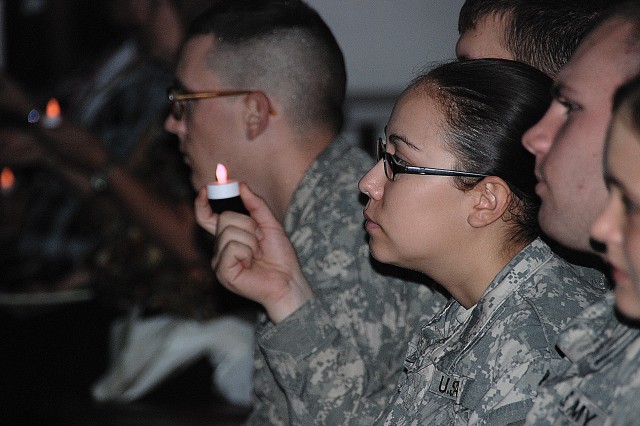
Pvt. Enedina Greer, 232nd Medical Battalion, solemnly holds her candle high during a candlelight vigil and silent witness presentation, all part of the Domestic Violence Awareness and Prevention Month ceremony on Fort Sam Houston, Texas.


Related Links

FORT SAM HOUSTON, Texas -- In an effort to bring Domestic Violence Awareness and Prevention Month to everyone's attention, the annual opening ceremony was held here, Oct. 1 at Army Community Services.
October is the month that each year as much information as possible is presented throughout the civilian and military communities to recognize the Domestic Violence Prevention program.
Michael Waldrop, deputy to the U.S. Army Garrison commander, Fort Sam Houston, opened the ceremony with remarks and the reading of the proclamation.
"The Army is now fully cognizant that the total well being of our Soldiers is totally dependent on the well being of our Soldier's families. The quality of life and maintenance of that quality of life is important to all of us and important to the Army in a broad perspective. To meet the mission we must preserve that quality and that includes domestic violence," said Waldrop.
Each year 3.5 million violations are committed against family members. The Army has its proportionate share of that. Domestic violence is not to be condoned. Do not turn a blind eye."
During the ceremony, stories of domestic abuse were read from the female and male perspective. Silhouettes were also on display with other stories of violence against family members.
In a more poignant testimony, Sarah Small, the guest speaker, told her story of seven years of abuse by her then husband, and prince charming, who also was a member of law enforcement. Her words were ones that would echo in the minds of the listeners.
"It couldn't happen to me," said Small of her life before the abuse began. But, she found it could happen to her, and it could happen to anyone.
Small, an advocate for domestic abuse awareness, spoke from the heart as she replayed the events that led to her writing her own obituary over five years ago. However, her words weren't needed and she is a survivor of a crowbar attack to her head and face, and loaded guns put to her head and in her mouth, stabbings, punching, slaps and even the killing of her dogs as means of threatening intimidation.
Small survived the seven years of brutal abuse and today uses her story to tell others of how domestic abuse can happen to anyone. "As an 'Army of one' we need to be aware of the unusual. Ask about the sunglasses if they aren't the norm for an individual, unusual bruises, sudden withdrawal, be aware," urged Small.
Following Small's unforgettable words of terror and escape from her abuser was a candlelight vigil, a silent witness presentation in honor of the victims of domestic abuse. Members of the audience held flickering 'candles' as the Domestic Violence Awareness and Prevention ceremony came to a solemn conclusion.
Domestic Violence Awareness is something everyone needs take seriously. Survivors don't necessarily like to stand before a crowd and share their stories of abuse, but everyone needs to hear them. If they make the listeners squirm in their seats then the words have touched the heart.
From the words of the proclamation, "We need all Soldiers, civilians, family members and retirees at this installation to dedicate themselves to the prevention of domestic abuse. Everyone is called upon to be a part of the perfect combination for prevention."

Soldiers, family, community prevent domestic abuse

October 15, 2009

California's GOP vote-boycott ends, key bills pass


Squabbles -- both between and within the parties -- are set aside as senators unanimously vote to restore domestic violence funding and make it easier for localities to borrow money.

Reporting from Sacramento - Setting aside political squabbles, Senate Republicans lifted their blockade on several budget bills Wednesday, voting with Democrats to approve measures that restore funding cut from domestic violence shelters and help cities and counties borrow money to balance their budgets.
Republican lawmakers had refused last month to help muster the necessary two-thirds vote for two dozen pieces of legislation in a dispute over unrelated matters.
"We've resolved the issues and we're moving forward," Senate minority leader Dennis Hollingsworth of Murrieta said after Wednesday's vote.
Lawmakers said they hope to carry the new bipartisanship into negotiations over a plan to upgrade California's water system. The Senate on Wednesday gaveled in special sessions on water and tax reform.
Senators voted unanimously to approve a measure restoring $16 million cut from the budget for 94 domestic violence shelters, forcing half a dozen shelters to close and others to reduce their services.
"We have put more families at risk," Sen. Leland Yee (D-San Francisco) said of the cuts. "When shelters close down, lives are at stake."
The spat between the two parties was not the only one that affected SB3X 13. The Democratic leadership stripped Yee's authorship of the bill... Read more here:  California's GOP vote-boycott ends, key bills pass -- latimes.com

October 8, 2009

Real Men Don’t Campaign


Real Men Don't

by:  Gail Lakritz

Every October reminds us that domestic violence still exists With Domestic Violence Awareness Month in America.  Statistics show that it may be more prevalent than reported.  In the United Kingdom,  only 56.8% of incidents are reported by women.1   This suggests that the United Nations reporting of 28% of women whose lives are effected by violence in this country may actually be in the area of 50%. 

In order to reduce that number, it is important to re-educate the public on the issue of violence against women in this country.  So far, the task has been limited to a few women's organizations that have had little or no effect on the problem.  Devoting money to educate women is an important act in preserving her life and the lives of her children, but it does not break the cycle.  The cycle begins with the abuser, not the victim. 

To this end, targeting the abuser by  making the abuser aware that they are the real problem, I suggest that all victims join in a campaign to enlighten the public and lawmakers.  I am suggesting that all victims begin by asking the national men's sports organizations to take up the mantle of an awareness campaign entitled "Real Men Don't".

Why the title "Real Men Don't"?  Real men do not need to feel superior to women.  They are secure in their lives and understand that violence is not needed to ensure their personal security.

Why sports organizations?  Simple, most men watch sports.  Abusers feed on the violence in sports.  A "Real Men" campaign would target the very audience that needs to be reached to end the violence. 

The following is an email that I sent this morning to the National Football League.   If every victim in America, which I personally estimate to be between  3,000,000 to 6,000,000 women per year, were to send this or a similar email to the NFL alone, they would see the prudency in  supporting such a campaign.  

I was wondering why the NFL and other male oriented sports organizations do not help in the  fight against violence predicted on women?  So many of your players have been involved in  these acts, why not go public and support women in ending the violence? 

I thank you in advance for understanding that you are a major player who could have a real  influence in the battle to end the violence.  Perhaps a campaign entitled "Real Men Don't" and a  devotion of commercial spots during your games would set you a cut above all the other sports  organizations.

I can see such a campaign as, not only a source of education to the problem, but as the impetus for the application of peer pressure.  With it, expanded campaigns could include "Real Policemen Don't", the education of the importance of writing accurate police reports and of  arresting perpetrators of violence against women.  "Real Lawyers Don't" for the education of lawyers and GALs in the area of Domestic Violence and not allowing plea deals.  "Real Judges Don't", an education for judges on the mental conditions that these people have and the importance of not protecting them.  "Real Lawmakers Don't", informing lawmakers of the importance of writing stricter laws on Domestic Violence.

Note from the author:  I, Gail Lakritz, grant permission for this article to be reproduced in any form of media that furthers the idea of the "Real Men Don't" campaign.

September 29, 2009

The Allstate Foundation and Tell a Gal P.A.L

The Allstate Foundation is once again running Tell a Gal P.A.L and ClickToEmpower.org  The Allstate Foundation supports survivors through resources targeted to build financial independence and educates the public on how hard it is for people to leave an abusive relationship without economic resources.
SHARE YOUR STORY
Readers can share stories of overcoming domestic violence or helping a “gal pal” in need at ClickToEmpower.org. Readers who submit stories can enter to receive a limited edition Tell a Gal P.A.L. t-shirt as worn by Mira Sorvino on the Web site.  Share Your Story

DONATE A SUIT (Sep. 28-Oct. 9)
Domestic violence survivors often find themselves with limited means to get back into the workforce and attain financial security. The Allstate Foundation is encouraging Americans to drop off nearly new women’s business suits to benefit survivors from September 28 to October 9 at select Allstate locations across the country. Donated suits will be given to local domestic violence organizations and Dress for Success affiliates to outfit domestic violence survivors with confidence as they enter or re-enter the workforce.  Donation Site Search

September 16, 2009

Where is your purple gonna be?

I usually dye my hair purple for Domestic Violence Awareness Month (DVAM) which is October, and I choose purple because that is the awareness color of Domestic Violence (DV).  People always stop me in public and ask me why my hair is purple; cause I do NOT look the type you’d think would normally have purple hair.  When they ask, I get the chance to tell them!!  Others aren’t so pushy with it and just hang purple lights around their house or purple ribbons on their cars.

Each year around this time I try to write up something about DVAM being just around the corner.  I like to make people aware of this month to encourage them to get involved in activities in their local areas.  Now is the time to start looking into what activities the DV agencies are hosting during the month of October, so that you can plan and won’t miss the event you want to attend or help with.

I feel that as a society we should be ‘aware’ of domestic violence year round.  However, I also realize that by setting aside a certain month to view a certain issue gives us time to focus on and process the information we receive during that specific month.  I encourage everyone to become involved in community programs through out the year, which are focused on preventing DV.

If you are not already involved in your local community or surrounding area with helping in the areas of DV Awareness and/or prevention, or helping the victims of DV then the following may be some ways in which you can get involved.  This is a general list to give you ideas.  If you would like more specific options on how you can help, please contact your local DV Shelter or State Domestic Violence Coalition.

Here is the post that I posted last year and I feel it still works, so I’m giving it to ya again!

So... I get asked: "Great, you tell me to help DV victims during awareness month, but how am I supposed to do that when I have never even met a DV victim?"

There are many people that would be more than willing to do something during Domestic Violence Awareness Month, however they just aren't sure what to do, or where or when or how...

This list is copied from this ARTICLE.  

In your place of worship
1. Encourage information about domestic abuse in the congregation's programs, youth groups, marriage preparation, study groups, etc.
2. Establish a committee to promote awareness of the problem and how the congregation can help.
3. Organize a drive to collect food, toiletries, household goods and other needed items for a local domestic violence service.
In your workplace
4. Display posters or brochures (in break rooms, restrooms, or meeting rooms) to promote awareness of domestic abuse and how to get help.
5. Organize a Brown Bag lunch or other event for co-workers and invite a speaker to talk about solutions to the problem.
6. Ask what policies your employer has developed to keep employees safe from a domestic abuser who threatens the workplace.
In schools and daycare
7. Encourage the editor of the school newspaper to have a special issue about teen dating violence and partner abuse.
8. Write a paper about domestic violence to share with students.
9. Educate teachers and other staff about the connection between child abuse and partner abuse.
In civic organizations, clubs or neighborhoods
10. Invite a speaker to educate organization members about domestic violence.
11. Organize a fundraising event or food/toiletries drive to benefit a domestic violence service agency.
12. Publish information about domestic violence and available resources in the newsletter.
13. "Adopt" a family seeking independence from an abuser, to assist with practical needs.

As a Citizen
14. Ask your local library to stock books on domestic violence and to set up displays to educate the public about the issue.
15. Speak out against domestic abuse: Expressing your view that domestic violence is unacceptable has a powerful effect on changing the norms that support abuse.
16. Write letters to newspaper editors or send commentaries to TV and radio to help raise awareness about domestic violence.
17. Vote for public leaders who take a strong stand against domestic abuse.
18. Call 911 if you see or hear a crime of domestic abuse in progress. Write down license plate numbers, locations, and any other information that may be helpful to law enforcement.
19. Volunteer with a domestic violence service. Organizations need help with office activities, fund raising events, technical and professional services and assistance to clients.
20. Donate used clothing and household goods to a program that gives these vital items to families seeking independence from an abuser.
21. Participate in neighborhood crime watch programs.

Hang information flyers and/or awareness flyers in public restrooms, or anywhere else you think would they would be noticed. Now keep in mind that you don't have to stop doing some of this stuff after October!  By all means...continue your efforts throughout the year.

The more the merrier!

So in stating this, I implore all of you out there to stand up and do something for domestic violence victims not only in October, but throughout the year. Turn these victims into proud SURVIVORS!!! Give them some hope and some help. To borrow a phrase used quite often, give them a hand-up not a hand-out.

All of these are really general and will take some research, time and effort on your part.  But, the way I look at it is this...the time I take to do even one of these activities just may save someone's life.....so are a few minutes of your life worth the life of another?

August 17, 2009

Preventing Abuse Conference

The 7th Preventing Abuse conference, Helping Protect Women, Children, Families and the Nation from Human Trafficking, Child Abduction, Pornography and Internet Predators, will be held September 11–13, 2009 at the Irvine Hilton in CA. www.preventingabuse.org (866) 454-1776. Noreen Gosch will be a speaker.

For more information about this conference please go here:  http://www.preventingabuse.org/about.html

Conference Overview

1.  Geographic Focus

2.  Impact on America

3.  Examples of Areas Affected by Human Trafficking/Abduction of Women and Children.

      1. Health care costs

      2. Society and social values

      3. Economic costs and impact on

      4. Legal--resource drain, etc.

      5. Social services and more

      6. Victim, and Victim's Family

      7. National Security

    4.  The Demand:

    Areas to be addressed relating to the demand:

      1. Demographics of the customers and the perpetrators

      2. What is the fuel of the kidnap and trafficking problem?

      3. What role does the popular culture have?

      4. How the entertainment industry can assist?

      5. What role does pornography (hard-core and "soft-core") play?

      6. The role terrorism.

      7. The impact of the Internet.

    5.  Legislative

    6.  Law Enforcement

    7.  Child Abduction Prevention:

    8.  Rescue and Recovery

    9.  The Reality of the Problem: The Responsibility to Act.

    June 24, 2009

    Senate Subcommittee to Vote on VAWA CJS Spending Measure

    Senate Subcommittee to Vote on VAWA CJS Spending Measure.

    Background
    Tuesday, June 23, 2009. The Senate Appropriations Subcommittee on Commerce, Justice and Science (CJS) will begin work on its FY 2010 budget, which includes funding for Violence Against Women Act (VAWA) programs.

    Last week the House passed their version of the FY 2010 Commerce, Justice, and Science Appropriations bill (HR 2847), which, thanks to your efforts included an increase of $17.5 million over the FY 2009 budget and the President’s FY 2010 budget proposal for VAWA CJS programs.

    Today we need you to call the members of the Senate CJS Subcommittee and ask them to fully fund VAWA programs at $683 million and raise the Victims of Crime Act (VOCA) Cap to $705 million.

    Take Action Now!

    Call the members of the Senate CJS Subcommittee and ask them to fully fund VAWA programs at $683 million and raise the VOCA Cap to $705 million.

    Click here to see if either of your Senators sits on the CJS Subcommittee.

    Never called your Senator before? Don’t worry, it’s easy!


    Call 1-866-305-9428 toll free to be connected to the Capitol Switchboard.

    Tell them the name of your Senator and they will connect you to their office. Your call will be answered by a receptionist. Tell him or her:

    “Hello, my name is ____ and I am a constituent, from [include your state and town or zip].”

    “I urge Senator [last name] to fully fund the Violence Against Women Act (VAWA) programs at $683 million and raise the Victims of Crime Act (VOCA) cap to $705 million. VAWA programs have helped to make our country a safer place for families, victims and communities. By fully funding these vital, cost-effective programs, Congress will help to break the cycle of domestic and sexual violence in our country."

    “Thank you.”


    Outlook and Next Steps
    After the CJS subcommittee passes its budget, the full Appropriations Committee is scheduled to vote on the CJS budget on Thursday, June 25th before the full Senate votes on the final CJS budget. Please stay tuned for updates.

    Email your friends, family and colleagues and encourage them to call. Our strength is in our numbers and your calls make a difference! For more information please contact Tralonne Shorter at tshorter@nnedv.org or 202.543.5566

    Additional Information

    Click here for more information on funding on VAWA funding.

    May 18, 2009

    Domestic violence: Legislation requiring automatic arrest of parolees goes to governor


    By Angela Rozas | Tribune reporter
    May 15, 2009
    Parolees accused of domestic violence would be automatically arrested for violating their parole under a measure sent to Gov. Pat Quinn Thursday.
    The bill comes a little more than a year after a woman was killed in Chicago by a former boyfriend on parole for murder. Mersaides McCauley, 22, was shot to death by Glen Martinez five months after he was arrested for attacking her and a parole officer declined to push to revoke his parole and he was freed.
    Under current state law, arrest warrants must be issued only if parolees commit felonies with a knife or firearm or don't register as sex offenders. In all other cases, arrest warrants for parole violations are issued at the state's discretion and decided on a case-by-case basis. The new law would take away that discretion for domestic violence crimes.
    The measure would also double the mandatory supervised release term for a number of domestic violence crimes to four years from two. Also, the bill would require 40 hours of domestic violence training for all parole officers handling more...Domestic violence: Legislation requiring automatic arrest of parolees goes to governor -- chicagotribune.com

    May 15, 2009

    Gay teens in SC excluded from being protected by new Domestic Violence Prevention Program

    This is just sick...Here’s part of since I can not comment intelligently on this, the link at the bottom is to the full article.

    COLUMBIA, S.C. (AP) — South Carolina lawmakers want to prevent violence in teen relationships but won't allow a new school program aimed at curbing such abuse to mention gay and lesbian partnerships.

    State representatives voted overwhelmingly Thursday to bar any mention of homosexual relationships in the new program for middle and high school students. The move was pushed by lawmakers who said they don't want schools teaching about gay relationships and said they doubt those partnerships have high levels of abuse.

    "I do not want the Department of Education or school districts teaching our children in grades six through 12 about same-sex relationships," said Rep. Greg Delleney, a Chester Republican who pushed to make the violence prevention program apply only to heterosexual relationships. "I'm sure it would develop into that."

    The measure, which was swiftly condemned by gay rights advocates passed the GOP-dominated House 75-25 and should head to the Senate next week. It initially was intended to curb youth violence in a state that consistently ranks high in the number of women killed by men.

    Steve Ralls, national spokesman for Parents, Families & Friends of Lesbians & Gays, said he had not heard of another state with an anti-dating violence program that excluded same-sex relationships.

    "We are astounded that there are those who would prioritize their own homophobia ahead of the safety of the young people of South Carolina," he said. "Lesbian and gay young people are often doubly vulnerable when they are in environments where they are disrespected and adults are sending clear messages that their well-being isn't as important."

    Bill sponsor Rep. Joan Brady said excluding gay relationships is fine and declared that, "Traditional domestic violence occurs in...MORE Here --> The Associated Press: SC House nixes mention of gays in date-abuse bill

    May 13, 2009

    Mary Kay launches initiative to help fight domestic violence

    The study outlined below was conducted from April 24, 2009 to May 7, 2009.  I want to point out that 3/4 of the Domestic Violence (DV) Shelters involved in this survey have stated that they have seen an increase in those seeking assistance.  I would like to also point out that we have seen a HUGE increase in murder-suicides in the last few months as well.  The results below state that shelters have noticed the increase since September 2008. 


     Mary Kay Inc.

    May 12, 2009 09:40 AM Eastern Daylight Time 

    “Mary Kay’s Truth About Abuse” Survey Links Economic Downturn to National Increase in Domestic Violence

    Mary Kay Launches Philanthropic Initiative Beauty That CountsTM to Help Fight Domestic Violence

    DALLAS--(BUSINESS WIRE)--Mary Kay Inc. today announced results from “Mary Kay’s Truth About Abuse” survey of domestic violence shelters across the country. The findings reveal an alarming trend: three out of four domestic violence shelters report an increase in women seeking assistance from abuse since September 2008, a major turning point in the U.S. economy. The survey data directly connects a major reason for the increase in domestic violence to the downturn in the economy.

    “Mary Kay’s Truth About Abuse” survey polled more than 600 domestic violence shelters nationwide. Representatives of the shelters surveyed report they have observed an increase in requests for assistance from domestic violence victims because of the following reasons:

    • Seventy-three percent attribute the rise in abuse to “financial issues.”
    • “Stress” and “job loss” (61 percent and 49 percent, respectively) also proved to be leading contributing factors in the reported increase in domestic violence cases involving women.

    “Mary Kay’s survey confirms what we’ve been hearing from domestic violence programs across the country,” said Sue Else, president of the National Network to End Domestic Violence. “The economic downturn is exacerbating domestic violence. The demand for domestic violence services is growing, and we must increase support for victims during this difficult time. Now more than ever, we urge corporations and other organizations to follow Mary Kay’s lead in the fight to end domestic violence.”

    “Mary Kay’s Truth About Abuse” Survey Regional Findings

    Mary Kay’s survey compared four U.S. regions, including the Northeast, South, Midwest and West. Survey highlights include:

    The number of shelters reporting an increase in women seeking help as a result of domestic violence since September 2008:

    • The region with the largest reported increase was the South (78 percent); followed by
    • The Midwest region, which reported a 74 percent increase;
    • The Northeast takes the No. 3 place with a 72 percent reported increase; and
    • The West rounds out the regional list with a 71 percent reported increase in women seeking help as a result of domestic violence.

    The survey also inquired about the cause(s) for the increase in domestic violence cases across regions:

    • Seventy-five percent of shelters in the West report “financial issues.”
    • Approximately 66 percent of respondents in the Midwest note “stress.”
    • More than half of respondents (53 percent) in the South report “job loss.”
    • The “loss of a home or vehicle” was reported more often in the Midwest than other regions, with 44 percent; the Northeast had the lowest with 35 percent.
    • Reasons more commonly associated with domestic violence, such as “substance abuse” and “relationship challenges,” also contributed to the increase in domestic violence shelter assistance in each region, according to the survey.

    One Lipstick at a Time: Beauty That Counts™ Initiative

    To help combat domestic violence, Mary Kay Inc. is launching a national philanthropic campaign, Beauty That Counts. In the United States, from May 1, 2009, through Dec. 15, 2009, $1 will be donated from each sale of Beauty That Counts™ Mary Kay® Creme Lipstick in limited-edition Pink Passion and in Gingerbread. As part of its U.S.-based efforts, Mary Kay Inc. is proud to support the Mary Kay Ash Charitable Foundation in its ongoing commitment to end domestic violence. For the inaugural year of the global Beauty That Counts™ initiative in 2008, Mary Kay is donating just under $2 million (USD) to causes that change the lives of women and children around the world, including domestic violence prevention and education efforts.

    Rhonda Shasteen, spokesperson for Mary Kay’s Beauty That Counts™ initiative, added: “Financial issues have affected many families across the country, putting domestic violence survivors at an even greater risk for abuse. That’s one more reason why Mary Kay offers programs such as Beauty That Counts™ to further its commitment to preventing and ending domestic violence.”

    For more information on Mary Kay’s Beauty That CountsTM program or its U.S. philanthropic efforts, please visit www.marykay.com.

    About Mary Kay

    Mary Kay, one of the largest direct sellers of skin care and color cosmetics, realized another year of record results. In 2008 Mary Kay Inc. and its international subsidiaries achieved $2.6 billion in wholesale sales worldwide. Mary Kay® products are sold in more than 35 markets worldwide, and the global Mary Kay independent sales force exceeds 1.9 million. To learn more about Mary Kay, log on to www.marykay.com or call 1-800-MARY KAY (1-800-627-9529).

    About “Mary Kay’s Truth About Abuse” Survey

    The survey polled 634 domestic violence shelters across the United States about domestic violence and the economy. The study was conducted online between April 24, 2009, and May 7, 2009.

    About the Mary Kay Ash Charitable Foundation

    The Mary Kay Ash Charitable Foundation was created in 1996, and its mission is twofold: to fund research of cancers affecting women and help prevent domestic violence while raising awareness of the issue. Since the Foundation’s inception, it has awarded nearly $18 million to shelters and programs addressing domestic violence prevention and nearly $12 million to cancer researchers and related causes throughout the United States. To learn more about the Mary Kay Ash Charitable Foundation, log on to www.mkacf.org or call 1-877-MKCARES (1-877-652-2737).

    March 24, 2009

    A Mother’s Letter

    This was written by a mother who recently won the right to keep her child safe. She fought a long, hard battle… against too many people willing to help her abuser keep the abuse alive. HER abuser is (or was?) stationed in Charleston, SC. As we celebrate her victory, please remember that there are SO MANY other victims being treated just as badly, or worse by those sworn to protect us. We will not stop. Our children deserve safety, and we are all dedicated to this. The mother’s are speaking out.. Can YOU hear them?? ~WyldeFaerie~

    I was asked to share an update of my long journey in search of justice with others. Others, who like me, have been forced to learn many of life’s most terrifying lessons the hard way and by those who we entrusted our safety with.

    When I first began my long journey, I never even knew that we had two different types of Senators in each state. But because the crimes committed against me, were inflicted by a member of the United States Coast Guard, I quickly learned the Multi Levels and Confusing Structure of our Government. Three years later and I am still confused. Because not only was I victimized by the man that I loved and trusted, but I also suffered by the lack of actions by his colleagues and superiors. I like to reference these individuals as. “ The boys in blue club”

    I learned due to hands on experience of having dozens of doors shut again and again while I continued to hope, plead, pray and search for safety. I can’t even tell you (because it was a lot) how many times, I heard the statement from Law Enforcement and Government Officials

    “How sorry they were because their Office was unable to help me, because it was outside of their Jurisdiction”…

    And then this Office gave me another number of another Office to call, and Guess what,,, 9 out of 10 of these Offices told me the same damn thing. Talk about frustration, disappointment and worse of all Despair.

    When I finally had enough money, I hired an Attorney. When I first met with my Divorce Attorney, she told me that the Court frowned upon parents who refused to allow the other parent contact with their child. I remember staring at her in disbelief and saying, “Why would any legal/law official force me to place my child in danger and she said because that’s just the way it goes. I went home from her office that day and cried. I remember being so confused, terrified, disgusted and not knowing what to do or which way to turn.

    A few days later I had to go down to the Police Station to report threats, that I received from my ex husband. I was informed by the SGT on that my husband had just been down to the police station with an Order out of a State (FL) (note a State He DID Not LIVE IN) and that he requested that NH Police assist him in serving me with this Emergency Custody of our Daughter. The Officer informed me, that I was lucky that I held a Restraining Order against him or they would have helped him serve this order. I perceived this as they would have assisted him in ripping my everything (my child), from my arms.

    I remember not believing that a Judge could never have allowed this, I remember the feeling of horror when I realized they had. I kept replying the “What if’s over and over in my head. What if they enforced this order, what if he took her, What if I didn’t have the RO Order Against him, what if, What if. For weeks I couldn’t get out of my own way. I wanted to die, but if I died, I knew that all I did was endanger my child even more.

    Prior to this I had sought the help of Coast Guard Work Life members and Coast Guard Commanders and watched how their definition of confidentially, meant informing the member that a report had been placed against them and then I suffered both physically and mentally because that member took out his rage on me.

    For a long time I debated on whether or not it was easier being a victim of domestic violence verse that of a being a Survivor. I never ever thought that our Court and Justice System were favorable to the Offender verse that of the Victims…. but I soon learned that most times that was the case….

    I called organizations who “marketed themselves as those who help domestic violence victims”. Sadly, more than less informed me that the crimes and abusive actions I suffered from and continued to suffer from were just not “Not Bad Enough”… Well, I personally view any form of abuse, whether it be mental, physical or sexual abuse as equally as horrible and terrifying as the other.

    To date the UAADV is the only one who did not display prejudice towards me and require that I be a “specialized victim of a certain form of abuse”.. Thank you UAADV for fighting equally for all victims of violence.

    I went back to my Attorney with a message, I told her that I hired her to fight for what was right and that was exactly was she was going to do. I told her ‘Screw the Bandwagon Approach” because I would rather die than place my child in harm’s way. Well she did just this and guess what? It got worse, the harder I stood the harder my Ex tried to make me fall. He falsely accused me of crimes and then his boys in blue fans arrested me. Each time I wanted to give up/give in but I kept remembering that I was dead if he ever got her.

    My daughter and I went into hiding, my ex found us, the court showed little and in many occasions no mercy. The Coast Guard continued to enable a Mad Man because he could drive a boat. They even failed to garnish this jack asses pay for 14 plus months until Senator Kennedy's Office kicked the crap out of them and I went public and had to let the world know all about my worst nightmares, in order to expose their Dishonorable Actions.

    I am still fighting them til this day and I will continue to do so until they get their Shit Straight and realize why men went to war… “ To Protect the Women and Children at Home”…. They need to go back to their Grass Roots instead of their continuous acts to cover up their many violations of the Lautenberg Amendment and concerns with obtaining Qualified Bowsenmates, instead of Protecting Safety of Women and Children,

    To tell the remainder of the 3 year story would require me to write a Novel. But what I learned was that Our Justice-Court System is in Need of Renovating. To many people turn a blind eye….I learned how important it is for Women to be familiar with the laws, acts and amendments that we have in place to protect us. And how we need to remind Congress and Our Justice System on the reason why each was put in place…

    As of Friday March 13, 2009, I won the most important thing in my entire world. My ex husband terminated all of his parental rights to my daughter. It cost me every penny I had plus some. Essentially I bought her Freedom. But This Day became my Independence Day.

    I finally won because he gave up his right to ever hurt me again.

    The rest of issues caused because of this tragedies actions, I will deal with… And I will deal each of them. I am smarter and I am stronger now. The wrongful actions only enabled and empowered me.

    Knowledge is Power.

    I will fight Even Harder Because

    “I Will Never Forget”

    Remember

    “A Mothers Love is the Fuel That Gives Us the Strength to DO the Impossible and Together We Are Unstoppable.”

    “ Never Forget”

    del.icio.us Tags: ,,,